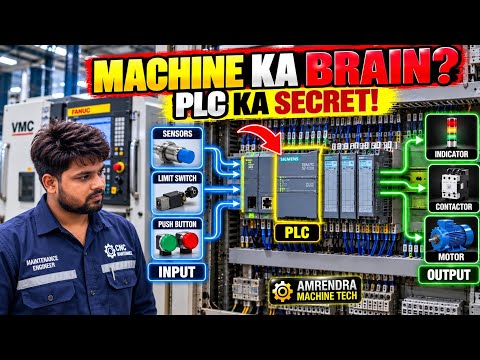
In today’s fast-paced industrial world, automation is the backbone of modern manufacturing. At the heart of almost every automated machine and factory floor sits a vital controller: the Programmable Logic Controller, or PLC. Understanding how PLCs function is essential for engineers, technicians, and operators looking to master the foundational principles behind CNC machining logic.
What is a PLC?
A Programmable Logic Controller (PLC) is a specialized digital computer used to automate electromechanical processes. Unlike standard desktop computers, PLCs are built to thrive in harsh industrial environments, enduring extreme temperatures, vibration, dust, and electrical noise. They continuously monitor input signals from machinery and make instantaneous decisions based on programmed rules to control output devices.
How Does a PLC Work?
A PLC operates through a continuous process called a scan cycle, which repeats thousands of times per minute. This cycle consists of three fundamental steps:
- Input Scan: The PLC reads data from connected input devices, such as sensors, limit switches, and pushbuttons.
- Program Execution: The PLC processes the user-written logic (often programmed using Ladder Logic) based on the input statuses.
- Output Scan: The PLC energizes or de-energizes output devices, such as motors, hydraulic valves, solenoid coils, and indicator lights.
The Role of PLCs in CNC Machining Logic
In modern subtractive manufacturing, PLCs work alongside Computer Numerical Control (CNC) units to ensure smooth operation. While the main CNC controller calculates complex tool paths and axis movements, the underlying CNC machining logic is managed by the PLC to execute critical auxiliary functions.
Key tasks governed by this integrated logic include: * Automatic Tool Changers (ATC): Sequencing tool indexing, swapping, and locking safely. * Coolant Systems: Controlling high-pressure coolant pumps during specific cutting operations. * Safety Systems: Managing safety door interlocks, light curtains, and emergency stop sequences. * Spindle Functions: Monitoring gear switching, spindle orienting, and lubrication loops.
Without well-structured CNC machining logic embedded in the PLC, automated machine tools could not operate safely or efficiently during complex machining cycles.
Why PLCs Drive Industrial Success
PLCs replaced traditional hard-wired relay panels, drastically reducing cabinet space, electrical troubleshooting time, and maintenance costs. By allowing software reconfigurations, PLCs offer unmatched flexibility on the factory floor. Understanding how PLCs integrate with automated tools empowers manufacturers to optimize uptime, enhance operator safety, and boost overall productivity in smart factory environments.

No comments:
Post a Comment