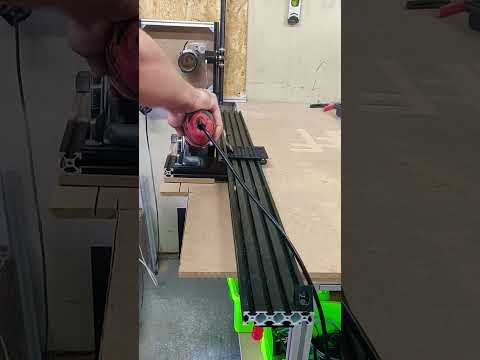
Every maker and woodworker knows the frustration of trying to achieve perfectly straight cuts with a standard hand saw or circular saw. While commercial track saws exist, creating a custom DIY guide rail is often the most cost-effective and tailored solution for your workshop. However, taking a rough prototype and turning it into a high-precision accessory requires the right manufacturing approach—and that is where a modern CNC prototyping application comes into play.
From Rough Workshop Drafts to Precision Tools
When building a prototype guide rail, initial designs usually start with scrap plywood, 3D prints, or basic aluminum profiles. While these early tests help verify the basic concept and ergonomics, they often lack the razor-thin tolerances required for professional-grade fabrication.
To elevate a simple workshop jig into a dependable piece of equipment, makers are increasingly turning to digital design and automated manufacturing. Utilizing a specialized CNC prototyping application allows you to translate rough hand-measured concepts into exact CAD models, ensuring perfect straightness, smooth glide channels, and zero blade-play along the guide track.
Key Advantages of Digital Prototyping for Custom Tools
Why should you consider CNC machining for your custom tool accessories and jigs? Here are a few compelling reasons:
- Unmatched Accuracy: CNC routing and milling ensure that guide edges remain perfectly straight over long distances, which is extremely difficult to achieve with manual cutting tools.
- Rapid Iteration: If your first prototype guide rail requires tighter tolerances or additional clamping slots, modifying the digital model and re-machining a part takes minimal effort.
- Material Versatility: Whether you choose to machine your custom guide rail from dense engineering plastics (like Delrin) or durable extruded aluminum, an adaptable CNC prototyping application handles diverse materials seamlessly.
Bringing Your Custom Workshop Jigs to Life
Building your own tools is about tailoring your equipment to fit your exact workflow. By bridging the gap between traditional hands-on DIY prototyping and modern digital fabrication, you can transform a basic track saw prototype into a durable, shop-ready guide system.
Whether you are refining a circular saw track, a router jig, or a specialized fence, incorporating automated CNC techniques ensures professional, repeatable results every time.

No comments:
Post a Comment