Mastering the Bridge: Why the Post Processor is Critical for CNC Success
This article provides an in-depth exploration of Post processor, covering foundational concepts, practical applications, and engineering insights.
In the world of precision manufacturing, the transition from a digital design to a physical part is often viewed as a seamless click of a button. However, for a Machinist Level 4, the magic happens in the translation. While Computer-Aided Manufacturing (CAM) software calculates the intended toolpath, it is the post processor that acts as the essential translator between your creative intent and the specific language of your CNC machine.
The Role of the Post Processor
A post processor is a unique piece of software code that takes the generic toolpath data from your CAM system and formats it into G-code that your specific machine controller can understand. Not all machines speak the same language; a Haas controller may interpret a command differently than a Fanuc or Heidenhain system. Without a correctly configured post processor, even the most optimized toolpath could lead to machine errors, broken tools, or worse—expensive crashes.
Why Independent G-Code Review Matters
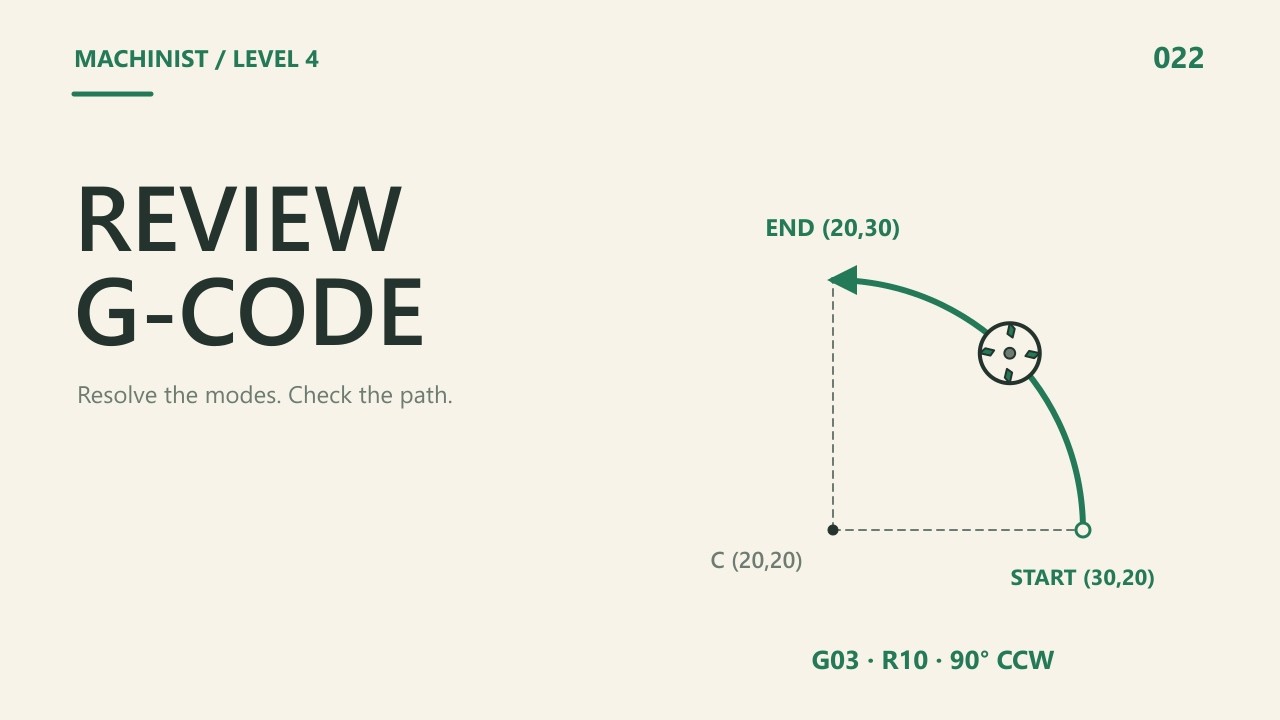
Even with a high-quality post-processing setup, seasoned machinists know that you should never take G-code at face value. An independent review of the generated code is a hallmark of professional-level machining. This step involves scanning the output for specific machine functions, canned cycles, and safety blocks.
During a review, you should look for:
* Coordinate Systems: Ensure the work offsets (G54-G59) match your setup.
* Tool Changes: Verify that tool numbers and height offsets are correctly called.
* Feed Rates and Spindle Speeds: Double-check that the "expressed" operations align with the material requirements.
Moving to Level 4 Precision
At an advanced level, post-processing isn't just about getting a machine to move; it’s about optimization. A well-tuned post-processing workflow reduces the need for manual edits at the controller, saving time and eliminating human error. By understanding how your CAM software interacts with your machine’s unique kinematics, you can ensure that the "intended toolpath" becomes a reality with absolute precision.
In conclusion, the bridge between virtual design and physical reality is built on the reliability of your post-processing phase. By combining a robust software setup with a disciplined manual G-code review, you ensure safety, efficiency, and a Level 4 standard of excellence in every part you produce.

No comments:
Post a Comment