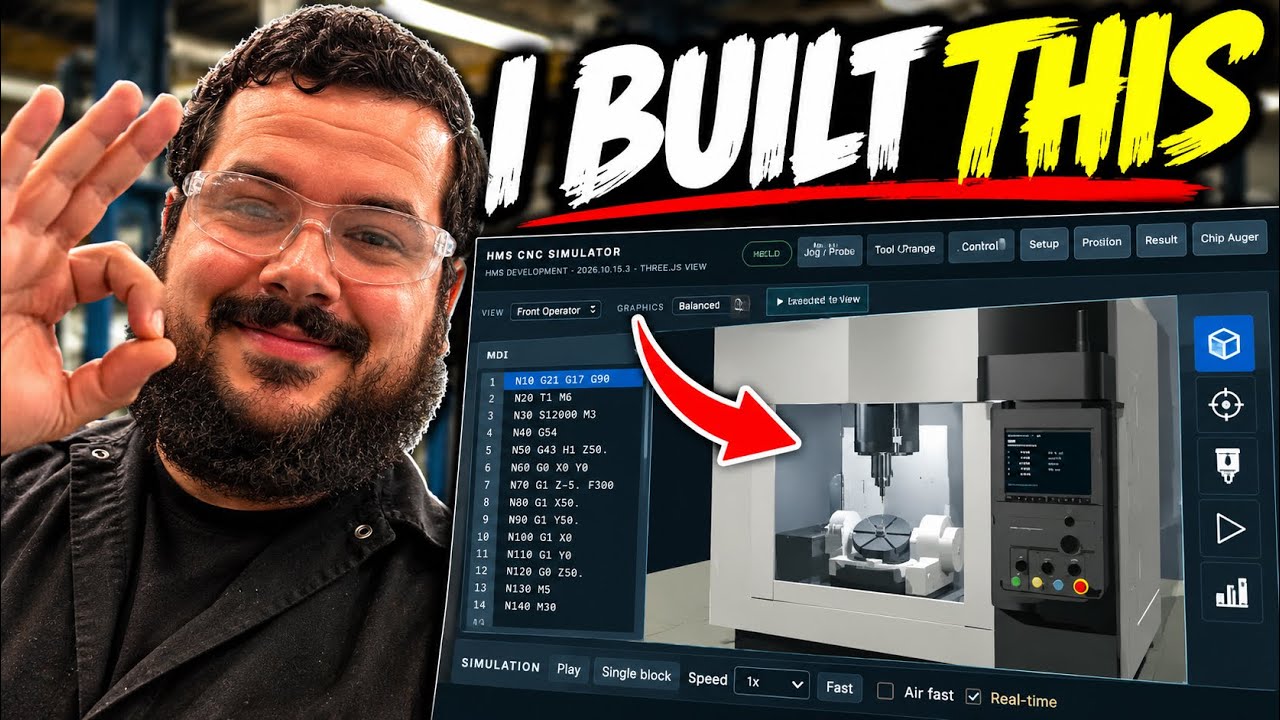
From Machinist to Developer: How I Built My Own CNC Simulator Software Using AI
This article provides an in-depth exploration of CNC simulator software, covering foundational concepts, practical applications, and engineering insights.
In the current digital landscape, most people discuss Artificial Intelligence in terms of generating quick passive income or writing emails. However, the true power of AI lies in its ability to bridge the gap between having a specialized skill and creating a functional tool. As a CNC machinist with a background in hardware but absolutely zero experience in software engineering, I decided to put this to the test. I set out to build my own functional CNC simulator software from scratch.
The Challenge: Turning Logic into Code
For a machinist, the logic of toolpaths, feed rates, and coordinates is second nature. However, translating that physical knowledge into a digital environment usually requires years of programming experience. I knew what I wanted the tool to do—visualize G-code and prevent machine crashes—but I didn't know how to write a single line of Python or JavaScript.
By leveraging AI as a coding co-pilot, I was able to bypass the steep learning curve of traditional computer science. I described the mechanical constraints and the desired output, and the AI provided the structural framework. This process transformed the way I viewed development, proving that domain expertise is often more important than knowing the syntax of a programming language.
Why Custom CNC Simulator Software Matters
The primary goal of this project was to create a sandbox environment where I could test complex operations without risking expensive equipment. Commercial software can be prohibitively expensive or overly complex for simple verification tasks. By building my own CNC simulator software, I could tailor the features specifically to my workflow, ensuring that the interface matched the reality of the shop floor.
The result was a lightweight, responsive tool that interprets G-code and provides a visual representation of the machining process. It wasn't just about the code; it was about democratizing the ability to create high-value industrial tools.
The Future of "No-Code" Engineering
This journey proved that we are entering a new era of manufacturing. You no longer need a degree in software engineering to solve technical problems in the machine shop. If you understand the physics and the logic of your craft, AI can handle the heavy lifting of the implementation.
Developing this CNC simulator software has opened my eyes to the possibilities of custom automation. Whether you are a hobbyist or a professional machinist, the barrier to entry for creating custom digital tools has never been lower. If you have an idea for a tool that could improve your efficiency, don't let a lack of coding experience hold you back—the AI is ready to help you build it.

No comments:
Post a Comment