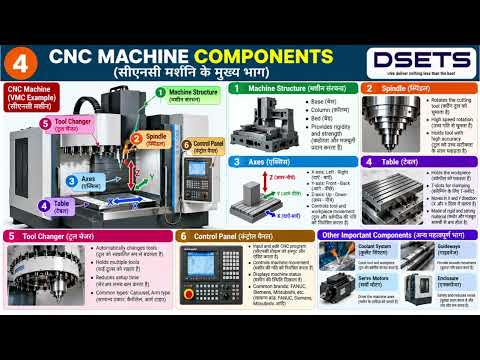
In today's fast-paced manufacturing landscape, precision and efficiency are paramount. Computer Numerical Control (CNC) machining and Vertical Machining Centres (VMC) stand at the forefront of this industrial revolution, enabling businesses to produce complex parts with unparalleled accuracy. Whether you are an aspiring machinist, an engineering student, or a professional looking to upgrade your technical skills, acquiring a solid CNC programming education is your first step toward mastering modern production processes.
Understanding CNC and VMC Machining Fundamentals
At its core, CNC machining utilizes computerized controls to operate machine tools such as mills, lathes, and routers. A Vertical Machining Centre (VMC) specifically features a vertically oriented spindle that holds cutting tools, making it ideal for flat workpieces, cavity sinking, and complex surface milling.
To unlock the full potential of these powerful machines, operators must understand how to write and interpret G-codes and M-codes—the standardized programming commands that instruct the machine on movement, spindle speeds, tool changes, and coolant flow. Engaging in comprehensive CNC programming education breaks down these intricate codes into manageable concepts, allowing beginners to transition smoothly from manual operations to automated machine setups.
Key Highlights of Part 1: Establishing the Core Concepts
This introductory guide focuses on building a strong foundational knowledge of CNC and VMC systems. Primary focus areas include:
- Machine Axes Identification: Understanding the Cartesian coordinate system (X, Y, and Z axes) to navigate tool paths accurately.
- Essential Programming Syntax: Getting hands-on experience with fundamental G-code and M-code commands.
- Workpiece Setup & Safety Protocols: Critical procedures for securing raw materials, setting zero points, and maintaining shop floor safety.
Why Quality CNC Training Matters for Your Career
Theoretical knowledge alone is rarely enough for the modern shop floor. Real-world success requires a clear link between digital program code and practical machining actions. Pursuing structured CNC programming education equips you with the problem-solving skills needed to optimize toolpaths, reduce cycle times, and prevent costly machine collisions.
Start your learning journey today by mastering the fundamentals, and set yourself up for long-term success in the high-demand field of advanced precision manufacturing!

No comments:
Post a Comment