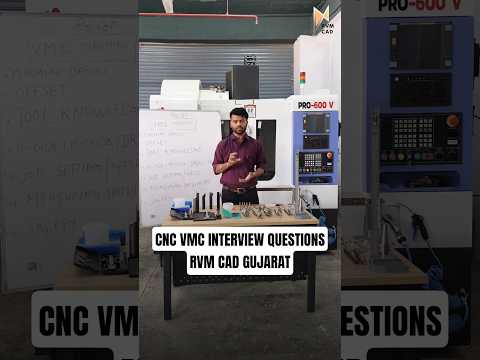
Landing a top-tier position in modern manufacturing requires more than just knowing how to operate heavy machinery. Today’s machinists and engineering professionals must master the technical principles of Computer Numerical Control (CNC) and Vertical Machining Center (VMC) programming. Whether you are preparing for an entry-level test or an advanced engineering interview, understanding modern CNC programming software alongside core machining concepts is critical to standing out from the competition.
Core Technical Concepts You Must Master
When recruiters evaluate candidates for CNC operator or programmer roles, they look for a strong blend of practical hands-on experience and theoretical understanding. Here are some fundamental areas you can expect to be quizzed on during your interview:
- G-Codes and M-Codes: Be ready to explain the difference between motion-based G-codes (such as G00 linear interpolation) and machine function M-codes (such as M03 spindle start).
- Work Coordinate Systems (WCS): Interviewers frequently test candidate knowledge on setting zero points (G54-G59) and calculating accurate tool length offsets.
- Manual vs. Automated Programming: You should know how to hand-write basic G-code lines as well as how to generate optimized code using powerful CNC programming software.
Why Software Proficiency Gives You an Edge
While manual G-code drafting builds a strong technical foundation, modern production environments rely heavily on speed, accuracy, and automation. Utilizing industry-standard CNC programming software enables machinists to design complex toolpaths, run virtual simulations to prevent costly spindle crashes, and dramatically reduce cycle times. Demonstrating your familiarity with CAD/CAM platforms during an interview proves that you are equipped for modern, high-efficiency manufacturing workflows.
Actionable Strategies to Ace Your Interview
- Review Troubleshooting Scenarios: Be prepared to discuss how you identify and fix common issues like chatter, tool wear, or offset errors.
- Highlight CAD/CAM Skills: Talk specifically about the software tools you have trained on and how you utilize them to streamline production.
- Showcase Formal Training: Mention specialized institute courses or practical VMC programming workshops to validate your technical capabilities.
By pairing solid machining fundamentals with a deep understanding of modern software, you can enter your technical interview with confidence and secure your next career milestone.

No comments:
Post a Comment