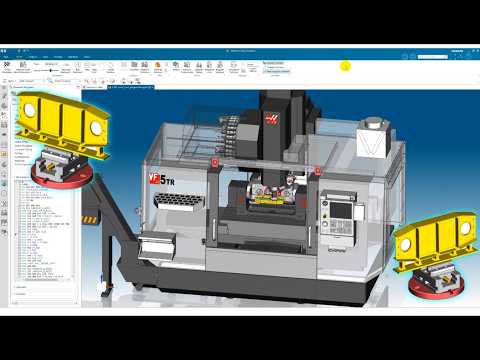
In today's fast-paced manufacturing industry, the demand for complex geometries and ultra-precise components is higher than ever. While traditional 3-axis and 4-axis machining methods still hold value, mastering CNC 5 axis programming is essential for engineers and machinists who want to push the boundaries of productivity and design complexity.
The Evolution: Moving Beyond 3-Axis and 4-Axis Machining
Basic 3-axis machining allows movement along the X, Y, and Z axes. While effective for simple parts, it often requires multiple setups for intricate designs, increasing the risk of alignment errors and costly re-work. Adding a 4th rotary axis expands capabilities, but 5-axis machining takes manufacturing to a whole new level by enabling simultaneous movement along five different axes.
By eliminating redundant setups, 5-axis operations drastically cut down production lead times while improving surface finish quality. It allows cutting tools to remain tangent to the work surface, resulting in smoother finishes, better tolerance control, and extended tool life.
Leveraging Advanced Software: Siemens NX CAM, Mastercam, and Catia
To harness the full power of multi-axis machines, high-level CAM software is crucial. Industry-standard solutions like Siemens NX CAM, Mastercam, and Catia V5 provide robust algorithms designed to generate safe, efficient multi-axis toolpaths.
When utilizing top-tier CAD/CAM platforms, CNC 5 axis programming allows programmers to maintain precise control over tool vector angles, clearance planes, and machine kinematics. Siemens NX CAM, in particular, stands out for its sophisticated capabilities, offering advanced features such as dynamic tilt orientation, smooth flowline toolpaths, and automated collision checking to protect expensive equipment.
Best Practices for Seamless 5-Axis Workflows
To get the most out of your multi-axis CNC machinery, consider implementing these essential strategies: - Prioritize Machine Simulation: Always run full 3D digital twin simulations to verify toolpaths and prevent catastrophic machine crashes. - Optimize Tool Lengths: Take advantage of multi-axis tilting to use shorter, more rigid cutting tools that minimize vibration and increase feed rates. - Master Lead and Tilt Angles: Fine-tune tool orientation parameters to ensure optimal cutting action across complex contoured surfaces.
Adopting modern CNC 5 axis programming techniques is no longer just an added skill—it is a competitive necessity for high-tech industries like aerospace, automotive, and medical device manufacturing. By continually sharpening your software skills, you can unlock faster turnaround times and unmatched component accuracy.

No comments:
Post a Comment