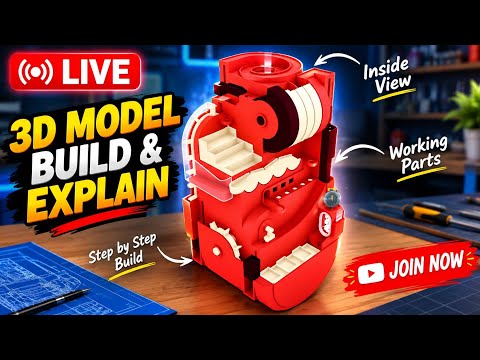
Have you ever wondered how intricate mechanical systems transition from static concepts into dynamic, functional digital assets? Creating assets with moving, interconnected parts is one of the most rewarding challenges in modern digital design. In this walkthrough, we break down the process of assembling complex mechanical builds, giving you a front-row seat to how individual elements come together seamlessly.
The Blueprint: Understanding Functional Mechanics
Before placing your first polygon or extruding your first shape, mastering the fundamentals of structural planning is crucial. Successful 3D modeling requires more than just aesthetic intuition; it demands a clear understanding of spatial relationships, tolerance, and real-world mechanics. When designing working parts—such as gears, pistons, or hinges—every component must be crafted with precision to ensure smooth interaction during animation or simulation.
Step-by-Step Construction of Working Components
Building functional mechanical structures requires a deliberate, structured workflow:
- Blocking Out Core Geometries: Start with basic primitive shapes to establish scale, proportion, and alignment across all mechanical parts.
- Refining Joints and Articulations: Focus on connection points. Ensure pivot points are aligned accurately so shafts, hinges, and levers move without clipping into adjacent meshes.
- Adding High-Detail Features: Apply bevels, fasteners, panel lines, and realistic materials to give functional parts depth and visual weight.
By breaking down the production workflow into manageable phases, advanced 3D modeling becomes far more accessible, turning overwhelming technical projects into structured, enjoyable builds.
Bringing Static Designs to Life
Understanding how individual parts interact isn't just useful for digital rendering—it is essential for 3D printing, game asset creation, and industrial product design. When you take the time to build and analyze each mechanical component step by step, you gain deeper insights into structural integrity, dynamic rigging, and realistic motion constraints.
Whether you are a beginner looking to expand your digital toolkit or an experienced artist refining your technical workflow, mastering functional 3D modeling will elevate the realism and quality of your creations. Start experimenting with dynamic mechanical setups today and bring your interactive ideas to life!

No comments:
Post a Comment