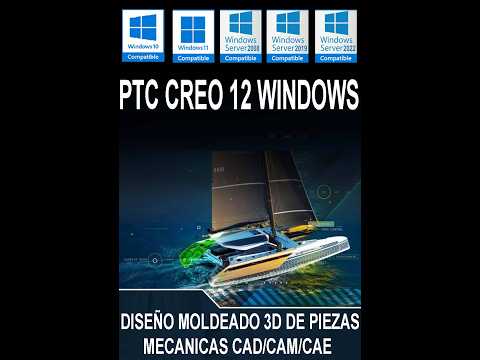
In the rapidly evolving world of industrial design, the ability to transform a conceptual sketch into a functional, high-precision mechanical part is a critical skill. PTC Creo Parametric stands at the forefront of this transformation, offering a robust suite of tools that bridge the gap between imagination and manufacturing. Whether you are a student or a professional engineer, understanding the integration of CAD/CAM systems within this software is essential for modern product development.
The Evolution of 3D Mechanical Design
PTC Creo is not just a 3D modeling tool; it is a comprehensive solution for CAD (Computer-Aided Design), CAM (Computer-Aided Manufacturing), and CAE (Computer-Aided Engineering). By using parametric modeling, engineers can create complex geometries for molded parts that are easily adjustable. This flexibility ensures that when a design change occurs, the entire model updates automatically, saving countless hours of manual rework.
Streamlining the Workflow with CAD/CAM Integration
One of the greatest advantages of using PTC Creo is its seamless CAD/CAM integration. In traditional workflows, moving a design from the "drawing board" to the factory floor often resulted in data loss or translation errors. With Creo, the transition is fluid. The software allows designers to simulate the manufacturing process, such as CNC machining or injection molding, directly within the design environment. This ensures that every mechanical part is optimized for "manufacturability" long before a physical prototype is ever created.
Key Benefits for Mechanical Engineers
The application of PTC Creo in mechanical design offers several distinct advantages: * Precision Modeling: Create intricate 3D molded designs with exact tolerances. * Integrated Simulation: Test the structural integrity of parts using CAE tools before production. * Increased Productivity: Automate repetitive tasks and focus on innovation rather than technical limitations.
By mastering the CAD/CAM capabilities of PTC Creo, professionals can significantly reduce time-to-market while improving the overall quality of their mechanical components. As industries move toward more automated and intelligent manufacturing processes, proficiency in such powerful software becomes a vital asset for any engineering team.
If you are looking to elevate your design capabilities or require expert assistance in 3D mechanical part design, now is the time to explore the full potential of parametric modeling. Embrace the future of engineering and turn your complex mechanical challenges into streamlined solutions.

No comments:
Post a Comment