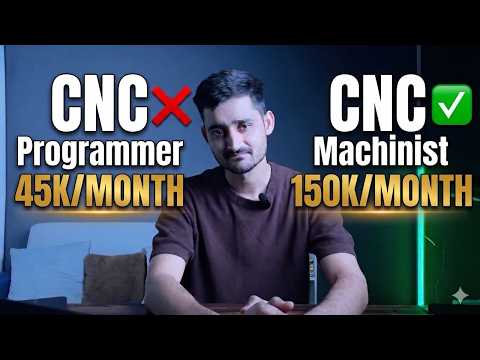
For years, the advice given to aspiring mechanical engineers has been simple: "Learn CNC programming." But today, we are telling you something different. Stop "learning" CNC programming in the traditional, passive way. If you are just memorizing G-codes and M-codes from a textbook without a strategy, you are wasting your time.
The industry has evolved, and the way we approach technical education must evolve with it. To truly master the craft, you need to shift your focus from theory to application.
The Problem with Passive Learning
Most students spend hours watching tutorials or reading manuals, believing they are gaining expertise. However, CNC programming is a practical art. When you are on the shop floor, the machine doesn't care how many codes you have memorized; it cares about the logic, the tool paths, and the precision of your execution. Passive learning creates a false sense of security that vanishes the moment you face a real-world manufacturing challenge.
Why CNC Programming Exercises are the Game Changer
To bridge the gap between being a student and becoming a professional machinist, you must prioritize hands-on practice. The most effective way to do this is by working through diverse CNC programming exercises. These exercises force you to solve spatial problems, calculate coordinates, and understand how different materials react to tool movements.
By engaging in structured CNC programming exercises, you move beyond simple memorization. You begin to understand the "why" behind every line of code. Whether it’s a simple facing operation or a complex contouring task, practicing with real-world scenarios builds the logical foundation necessary to troubleshoot errors on the fly.
Transitioning from Theory to Results
So, how should you proceed if you want to become a high-paid CNC expert? 1. Understand the Logic: Don't just copy code; learn the geometry and mathematics behind the tool path. 2. Use Simulation Software: Before hitting the machine, test your logic in a virtual environment. 3. Consistent Practice: Set aside time daily for new CNC programming exercises that increase in complexity.
At Mech Veda, we believe in empowering mechanical engineers with skills that actually matter in the industry. Stop being a passive learner and start being a creator. The transition from a beginner to an expert isn't found in a textbook—it is found in the grit of practical application and the repetitive success of your programming logic. Master the exercises, and you will master the machine.

No comments:
Post a Comment