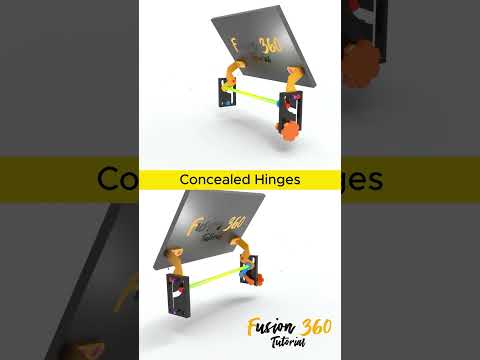
Close a lid, cabinet, or device enclosure, and suddenly all the hardware disappears into a clean, seamless surface. Have you ever wondered where the hinge actually goes? What looks like magic from the outside is actually a masterclass in mechanical engineering and high-precision manufacturing.
Understanding the Mechanics of the Hidden Hinge
Unlike traditional butt hinges that rely on a single visible pin axis, concealed hinges utilize intricate multi-pivot linkage systems. When you swing the lid open, these internal scissor-like arms extend and shift the pivot axis outward. As you close it, the linkage retracts smoothly into an internal pocket, hiding every mechanical component entirely from view.
Achieving this level of fluid motion within restricted physical space requires extreme tolerances. If a component is even a fraction of a millimeter off, the lid will bind, misalign, or fail to sit flush against the body.
Designing Seamless Motion with CAD/CAM Technology
This is where advanced CAD/CAM technology becomes essential. Engineers use Computer-Aided Design (CAD) software to model and simulate the complex kinetic paths of multi-linkage hinges long before a physical prototype is produced. By analyzing clearance, collision points, and stress distribution in a virtual 3D environment, designers guarantee perfect motion paths.
Once the digital design is perfected, the Computer-Aided Manufacturing (CAM) phase takes over. Integrating modern CAD/CAM workflows allows high-precision CNC machinery and automated tooling to produce intricate hinge arms and pivots with exact sub-millimeter accuracy. This seamless transition from digital simulation to physical production ensures every part fits together flawlessly.
The Impact on Modern Product Design
Concealed hinge mechanisms are no longer reserved for custom cabinetry; they are vital in modern consumer electronics, automotive interiors, and premium hardware enclosures. Through innovative CAD/CAM processes, engineers can continue pushing the boundaries of functional aesthetics—delivering sleek, modern surfaces without sacrificing durability or operational performance.


No comments:
Post a Comment