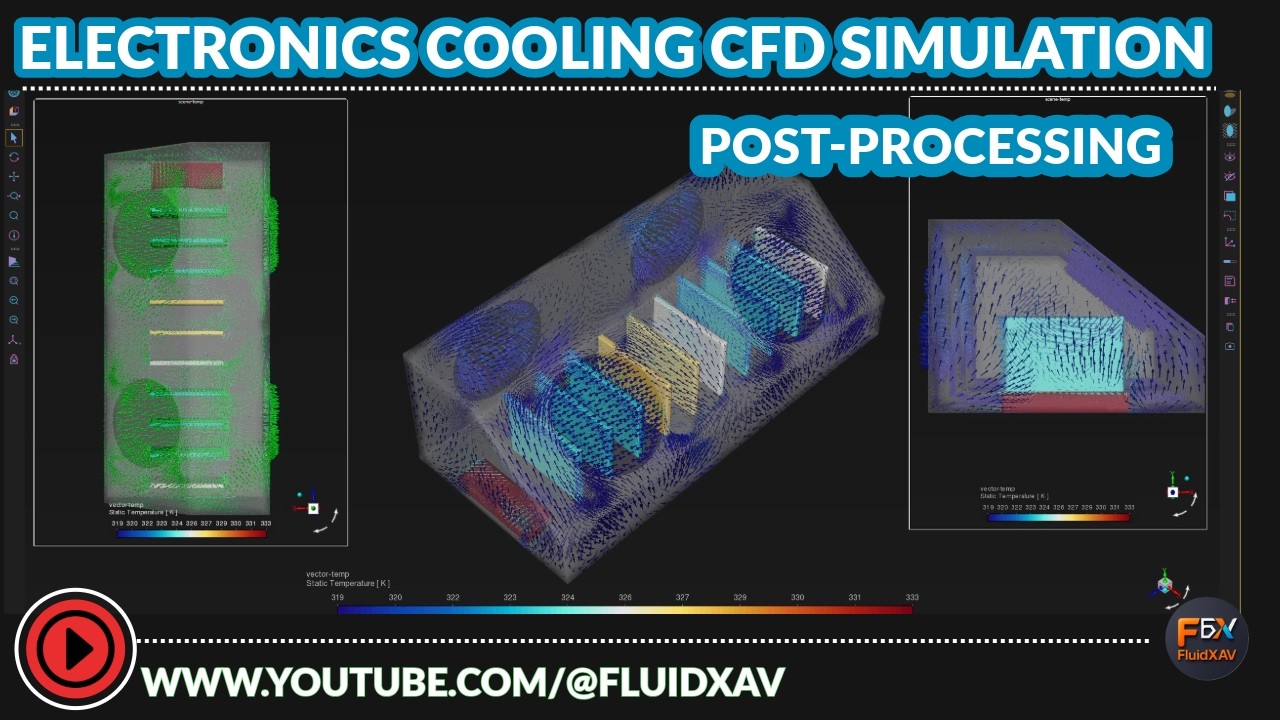
Mastering the CFD Post Processor: Analyzing Electronics Cooling Results
This article provides an in-depth exploration of Post processor, covering foundational concepts, practical applications, and engineering insights.
Running a Computational Fluid Dynamics (CFD) simulation for electronics cooling is only half the battle. Once your solver finishes its iterations in software like Ansys Fluent, the real magic begins in the visualization stage. To turn raw numerical data into actionable engineering decisions, you need to master the art of post-processing and results analysis.
The Role of a CFD Post Processor in Thermal Management
A robust CFD post processor allows engineers to peek inside complex electronic enclosures without building expensive physical prototypes. Whether you are evaluating a printed circuit board (PCB), microprocessors, or high-power electronics, visualizing thermal behavior is crucial.
By leveraging a modern post processor, you can generate clear temperature contours, velocity vector plots, and fluid streamlines. These visual tools instantly reveal thermal hotspots, recirculation zones, and airflow bottlenecks that could compromise component reliability.
Key Techniques for Effective Simulation Analysis
To optimize your thermal design, focus on these essential post-processing steps:
- Temperature Contours: Map out surface and volume temperatures to identify critical junction temperatures on chips and ensure components remain within safe operating limits.
- Airflow Vector Fields & Streamlines: Trace pathlines to analyze how cooling air moves across heat sinks and around components, helping you eliminate dead zones with poor ventilation.
- Quantitative Data Extraction: Calculate exact mass flow rates, average heat transfer coefficients, and pressure drops across fan boundaries or vents.
Turning Simulation Data into Engineering Solutions
Ultimately, a powerful post processor serves as the vital bridge between raw simulation results and real-world design improvements. By interpreting the visual and quantitative output accurately, thermal engineers can make confident modifications—such as optimizing heat sink geometry, altering vent placements, or selecting the ideal cooling fan—to guarantee product performance and longevity.
Mastering these post-processing techniques empowers you to validate your designs faster, reduce thermal failure risks, and deliver reliable electronic devices to market.
Visual Insights & Illustrations


No comments:
Post a Comment