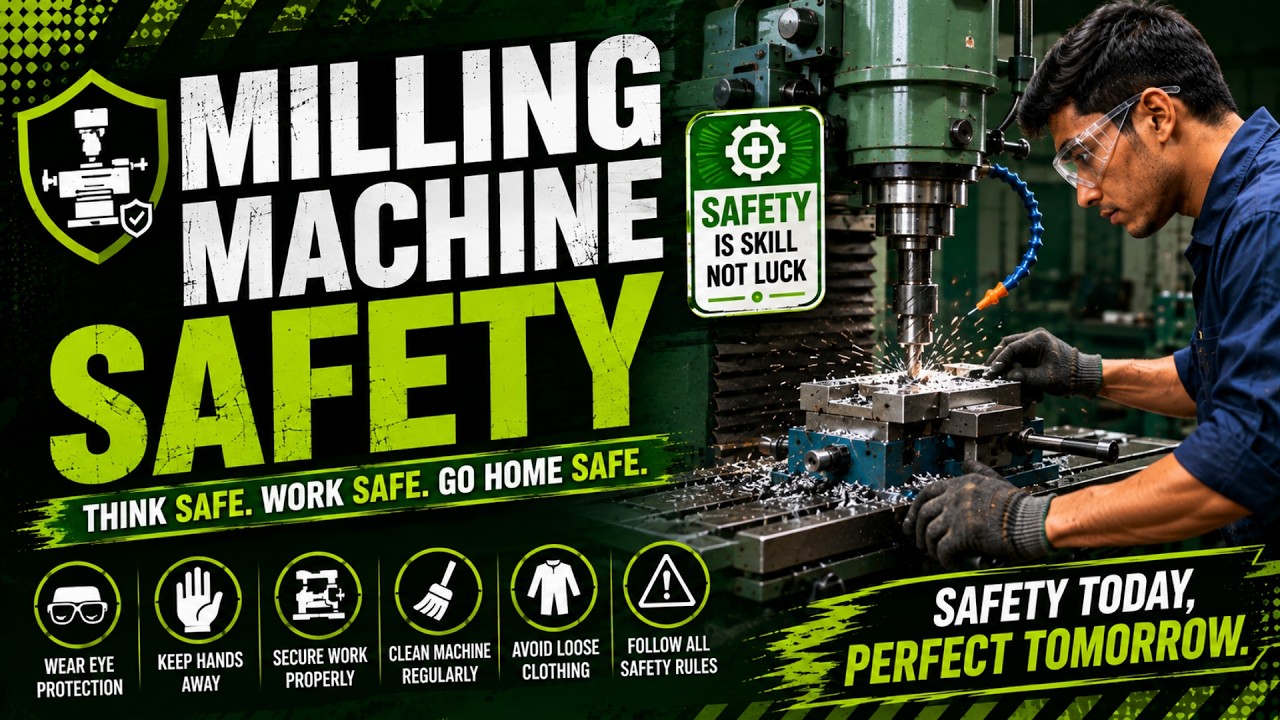
Mastering Workshop Safety: Essential Rules for CNC Milling and Machine Operations
This article provides an in-depth exploration of CNC milling, covering foundational concepts, practical applications, and engineering insights.
Milling machines are the backbone of modern workshop manufacturing, capable of shaping raw metals and materials into precision components. Whether you are operating traditional manual equipment or advanced CNC milling machinery, safety should always be your top priority. Machining involves high-speed rotation, sharp cutting tools, and immense mechanical force, making proper safety protocols non-negotiable for every operator.
Essential Pre-Operation Safety Checks
Before powering up any machine, a thorough pre-operation inspection is critical. Inspect the cutting tools for wear or cracks, ensure protective guards are properly positioned, and confirm that your workpiece is securely clamped to the machine table. When setting up a CNC milling center, double-check your G-code programs, tool offsets, and clearance heights to prevent costly tool collisions. Taking a few extra minutes for preparation drastically reduces the risk of mechanical failure and workplace accidents.
Personal Protective Equipment (PPE) and Proper Attire
Safe operation starts with proper personal preparation. Operators must strictly adhere to safety standards before approaching any machinery:
- Eye and Face Protection: Always wear ANSI-approved safety glasses with side shields or a full face shield to protect against flying metal chips and coolant splash.
- Proper Clothing: Avoid loose-fitting clothes, long sleeves, or dangling jewelry that could easily snag in a rotating spindle.
- Hair Safety: Securely tie back long hair beneath a cap or hairnet.
- Footwear: Wear steel-toed safety shoes with non-slip soles to guard against heavy fallen parts and oily floors.
Maintaining Operational Discipline
Safety remains ongoing throughout the entire machining process. Never leave a machine running unattended, especially during manual cutting operations. Although modern CNC milling processes offer automated precision, operators must stay alert and prepared to hit the emergency stop button if abnormal noises, severe vibrations, or burning smells occur.
Always keep your work area clean and organized. Use a brush or chip scraper—never your bare hands—to clear away metal shavings, and never attempt to adjust the workpiece or coolant nozzle while the spindle is actively rotating.
By committing to these fundamental safety principles, workshops can maximize productivity while protecting their most valuable asset: the machinist.
Visual Insights & Illustrations


No comments:
Post a Comment