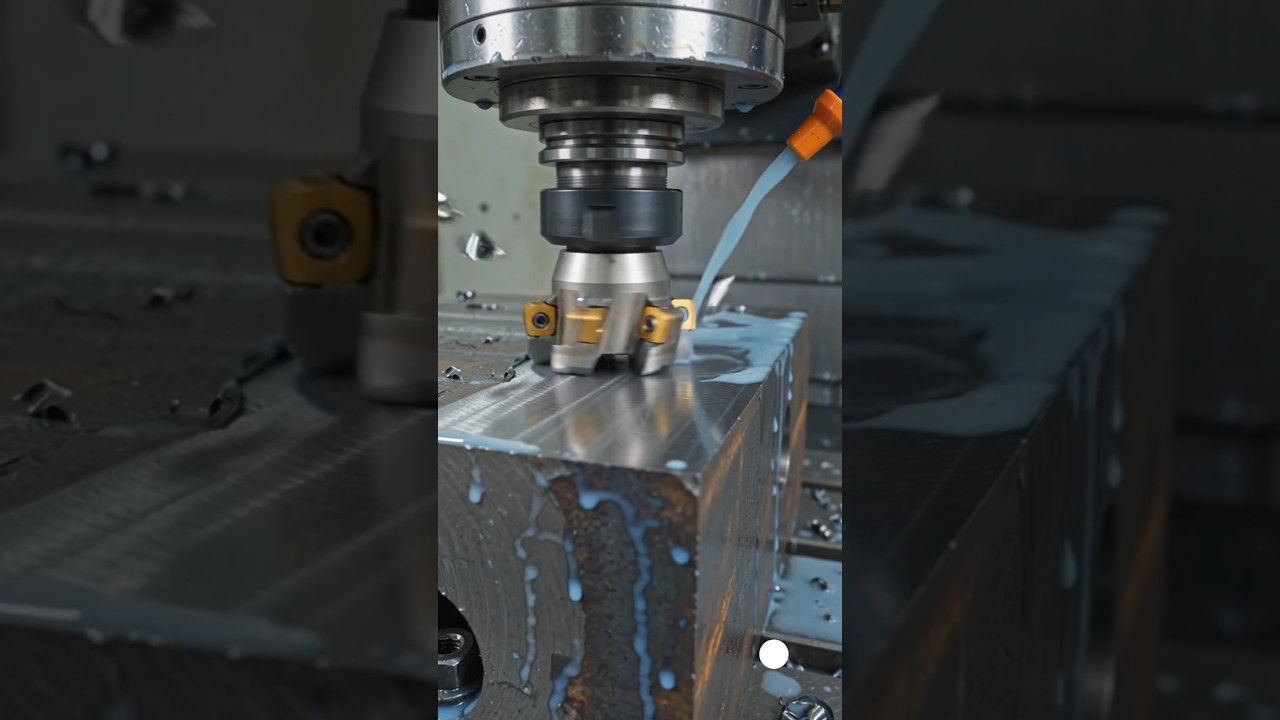
The Secret to Achieving a Flawless Mirror Finish in CNC Milling
This article provides an in-depth exploration of CNC milling, covering foundational concepts, practical applications, and engineering insights.
Have you ever looked at a freshly machined block of steel and wondered how it achieved a reflective, mirror-like finish? In modern manufacturing, one of the most satisfying outcomes of precision CNC milling is producing metal surfaces so smooth you can practically see your reflection in them.
While it might look like magic, creating this ultra-smooth surface comes down to a combination of cutting mechanics, high speeds, and specialized tooling. The primary technique behind this stunning result is known as face milling.
What is Face Milling?
Face milling is a machining process where the cutting action occurs primarily at the end corners or face of the cutter. The tool rotates around an axis perpendicular to the workpiece surface, removing material as it sweeps across the top layer. Rather than tearing through the metal, a properly setup face mill uses precision carbide or ceramic inserts to slice away thin, uniform shavings with extreme accuracy.
Factors That Create the Mirror Finish
Transforming a rough piece of raw metal into a glossy mirror requires several critical elements to work in harmony:
- Wiper Geometry: High-end face mills often use "wiper inserts." These specialized cutting edges feature a flat surface that acts like a burnishing tool, smoothing out microscopic feed marks left by preceding teeth as the cutter moves forward.
- Optimal Cutting Speed: High spindle RPMs paired with a controlled feed rate allow the cutting edges to cleanly shear the material, preventing the metal from tearing or adhering to the tool.
- Effective Chip Evacuation: Pressurized coolant blasts away hot metal chips instantly. This prevents the tool from re-cutting stray debris, which would otherwise scratch the pristine surface.
- Machine Rigidity: Eliminating vibration (chatter) is essential. A rigid setup ensures the tool maintains a constant, precise depth of cut across the entire workpiece.
The Value of Precision Surface Finishing
Achieving a low surface roughness value (Ra) isn't just about aesthetics. In demanding sectors like aerospace, automotive, and medical device manufacturing, a mirror-like finish reduces surface friction, increases wear resistance, and enhances the overall structural integrity of critical components.
By mastering the mechanics of tool geometry, speed, and lubrication, high-performance CNC milling delivers ultra-smooth surfaces that meet the highest technical standards—combining engineering perfection with unmatched visual appeal.
Visual Insights & Illustrations


No comments:
Post a Comment