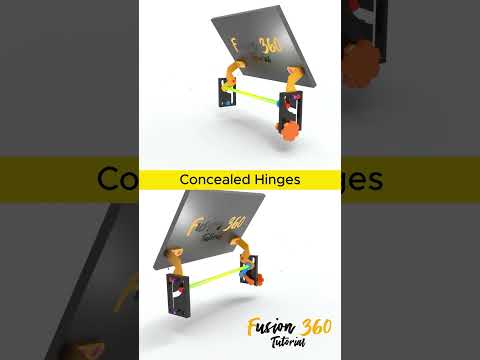
Have you ever closed a luxury cabinet, sleek box, or modern device and wondered, "Where did the hinge go?" When closed, the surface appears completely seamless, leaving no trace of mechanical hardware. This invisible aesthetic isn't magic—it is a triumph of modern engineering and precise mechanical design.
The Magic Behind the Concealed Hinge
Traditional hinges are functional, but they often disrupt a clean aesthetic by exposing pins, knuckles, or mounting screws. Concealed hinges—also known as hidden or invisible hinges—solve this problem by tucking the entire pivoting mechanism inside the structure's interior.
When the lid or door closes, a multi-pivot linkage system smoothly retracts the hinge arms into hidden recessed pockets. This mechanism allows two surfaces to meet perfectly flush without any visible hardware. Achieving this level of fluid motion requires incredibly tight geometry, as even a fraction of a millimeter in misalignment can cause the lid to bind or sit unevenly.
Bringing Complex Mechanisms to Life with CAD/CAM
Creating a functional hidden hinge is a design challenge that relies heavily on modern CAD/CAM technology. Before physical production even begins, mechanical engineers utilize advanced CAD/CAM software to model complex multi-linkage kinematics, simulate motion paths, and stress-test pivot points in a virtual 3D environment.
Once the motion profile is perfected, the seamless integration of computer-aided design and manufacturing ensures that components are produced with extreme precision. Thanks to CAD/CAM workflows, manufacturers can mill and assemble custom concealed hinges with micro-tolerances, guaranteeing smooth, continuous operation over thousands of cycles.
Whether used in high-end cabinetry, automotive interiors, or modern consumer electronics, concealed hinge mechanisms showcase how clever engineering can turn functional necessities into invisible works of art.


No comments:
Post a Comment