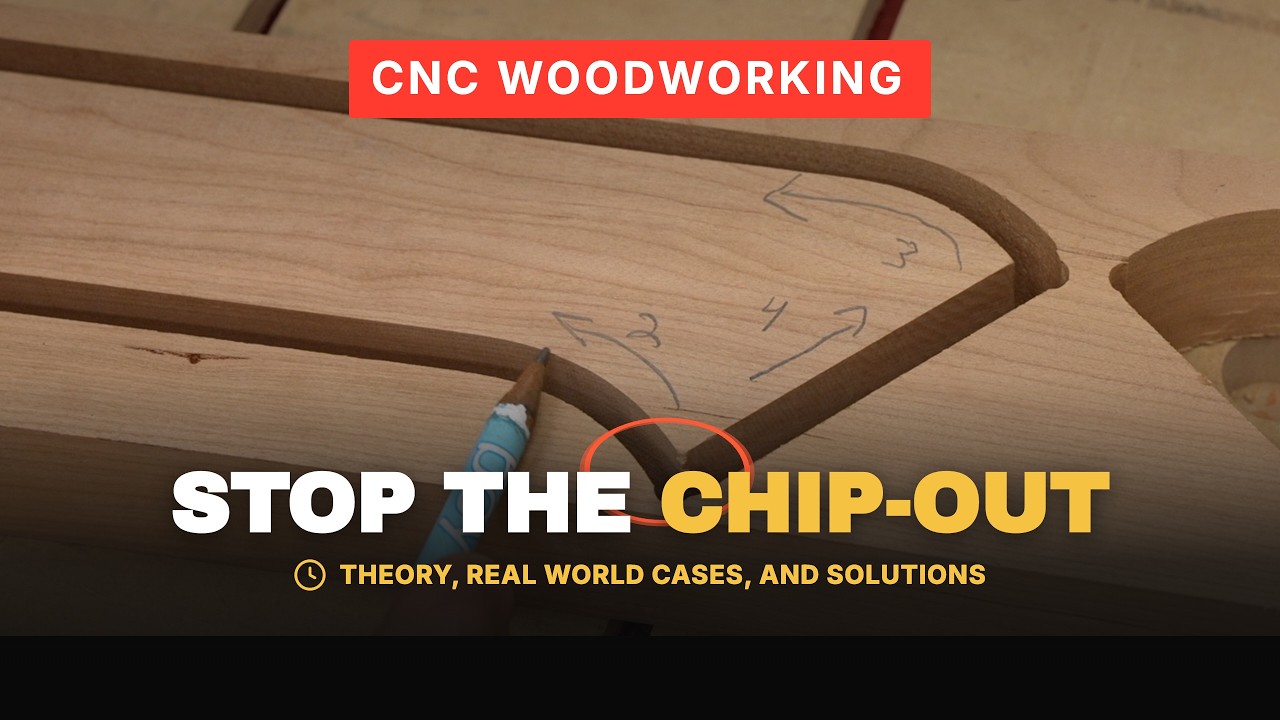
Mastering CNC Toolpath Theory: How to Eliminate Material Chip-Out for Clean Cuts
This article provides an in-depth exploration of CNC toolpath theory, covering foundational concepts, practical applications, and engineering insights.
Nothing ruins an otherwise flawless CNC project faster than material chip-out. You spend hours designing your part, setting up your stock, and running a job, only to discover splintered edges or ugly tear-out during the final pass. While many makers blame low-quality lumber or dull end mills, the root cause usually comes down to how your CAM software generates cutting movements.
By understanding CNC toolpath theory, you can easily predict where cutting forces will cause blowout and adjust your strategies before wasting valuable stock.
Why Does CNC Chip-Out Happen?
Chip-out occurs when the cutting edge of a bit exits the workpiece material without sufficient support. As the flutes scoop out material, shear stress builds up along the cut line. If the surrounding grain or laminate isn't strong enough to resist that outward force, the material fractures—leaving ragged, ugly edges behind.
Factors like wood grain direction, feed rates, and tool geometry (upcut vs. downcut spiral bits) certainly impact edge quality. However, the direction of travel and how the cutter enters or exits the material play the most critical roles.
Applying CNC Toolpath Theory to Stop Tear-Out
When putting practical CNC toolpath theory into action, your primary objective is to direct cutting forces back into the stock rather than pulling them outward. Here are essential toolpath adjustments to implement in your CAM workflow:
- Climb vs. Conventional Milling: Switching between climb and conventional cutting changes where the cutter tooth enters and exits the profile. Climb milling starts at maximum chip thickness and exits at zero thickness, which often prevents surface tear-out on sensitive hardwoods and laminates.
- Lead-Ins and Lead-Outs: Instead of plunging directly onto a vector boundary or lifting straight up at a corner, use arc-shaped lead-in and lead-out moves. This gradual engagement prevents harsh force spikes that cause edge chipping.
- Ramping Cuts: Ramping the bit into the material at a smooth angle rather than plunging straight down reduces vertical pressure, protecting delicate top veneers from lifting.
Smart Machining Strategies for Perfect Edges
Mastering CNC toolpath theory allows you to combine clever machining tactics for maximum cut quality. For challenging materials like veneered plywood, consider running a shallow scoring pass using a downcut bit first, followed by a full-depth pass. Alternatively, leave a thin "skin" of material during roughing and execute a light finishing pass to clean up the edge effortlessly.
By optimizing your toolpaths to handle material forces intelligently, you will eliminate costly re-dos, reduce hand sanding, and achieve professional, chip-free cuts on every single project.

No comments:
Post a Comment